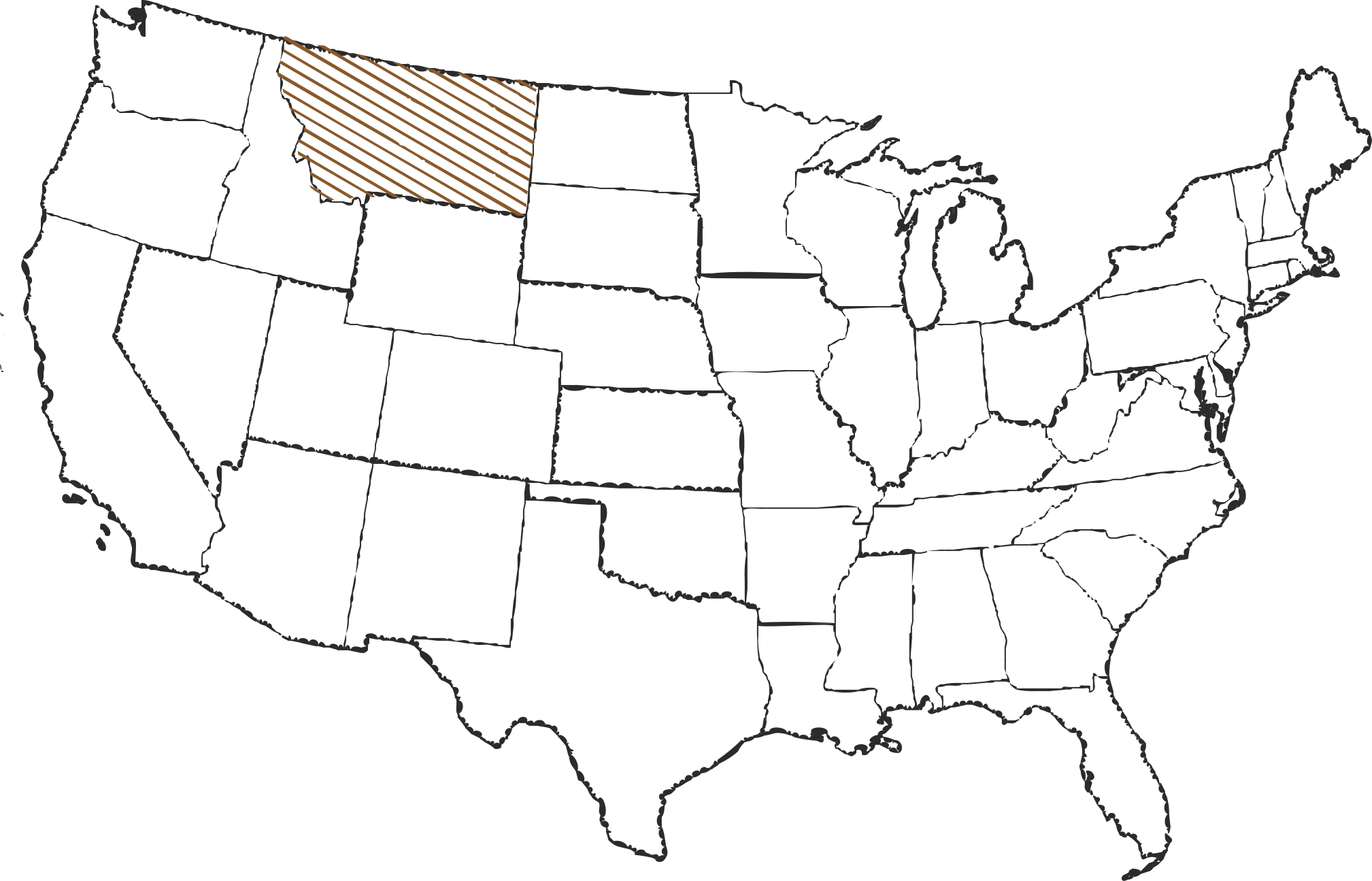
Mineral Rights · Montana

Mineral rights
in Montana.

Montana's eastern counties sit on the western edge of the Bakken play and the Williston Basin. Activity is quieter than in North Dakota, but mineral ownership here is significant and often inherited. We are happy to help you understand what you have.

01

Quieter than the Dakotas, but still meaningful.

Montana's oil and gas activity is concentrated in the eastern third of the state, where the Williston Basin (and its famous Bakken play) extends westward from North Dakota. Richland, Roosevelt, and Sheridan counties have seen meaningful Bakken development, though never at the intensity of the play's North Dakota core.

South of the Bakken, the Cedar Creek Anticline runs through Fallon and Wibaux counties, producing from shallower conventional reservoirs at a steady, long-standing pace. Further west, smaller plays exist in the Powder River Basin of southeastern Montana and the Big Horn Basin, but activity in both is limited.

For Montana mineral owners, inherited rights often trace back several generations to ranching and homesteading families. Ownership records can be complex, especially for split estates where the surface has been sold away but the minerals remain in the family.

02

Three basins, mostly the Williston.

Montana's oil and gas production is driven by three distinct basins, with the Williston accounting for the majority of modern activity.

Williston (Bakken)
The western extension of the Bakken play. Horizontal drilling in Richland, Roosevelt, and Sheridan counties has produced meaningful oil volumes since the mid-2000s, though at lower intensity than the play's North Dakota core.
Cedar Creek Anticline
A long-producing conventional play running through Fallon and Wibaux counties. Wells are shallower and economics more modest than the Bakken, but production has continued for decades.
Powder River (MT side)
The Montana portion of the PRB, primarily in Big Horn and Rosebud counties. Activity is modest, with most operations concentrated on the Wyoming side of the border.
04

Who drills in Montana.

Montana's operator list reflects both Bakken-focused independents and long-standing conventional operators. Many producing wells in the state are operated by smaller companies that are less familiar to mineral owners in other basins.

The Bakken has seen significant operator consolidation in recent years. Some names above reflect predecessor entities still appearing on older division orders.
05

Montana is a moderate-touch state.

Montana's oil and gas regulatory framework is neither as permissive as Wyoming's nor as involved as Colorado's. The state takes a balanced approach that tends to favor development while preserving meaningful public input on permitting decisions.

State Regulator
MBOGC (Montana Board of Oil and Gas Conservation)The primary regulatory body. Oversees permitting, spacing, pooling, and production reporting across the state.
Records System
MBOGC online records databasePublic records of permits, pooling orders, and production. Less sophisticated than Colorado or Wyoming systems but reliable.
Pooling Process
Compulsory pooling requires a majority consentOperators typically must obtain lease commitments from a majority of mineral owners before compelling participation from the rest.
Standard DSU
640 or 1,280 acres, depending on formationMost Bakken horizontal wells in Montana are drilled within 1,280-acre units (two sections), similar to other parts of the play.
Split Estate Context
Common, especially on reservation landsMontana has significant split-estate acreage, including on tribal lands. Ownership research for inherited interests often requires working through multiple historical transactions.
Own minerals in Montana

Let us take a look.

Tell us what county you are in and we will put together a plain-English analysis of what you have. No pressure, no pitch.