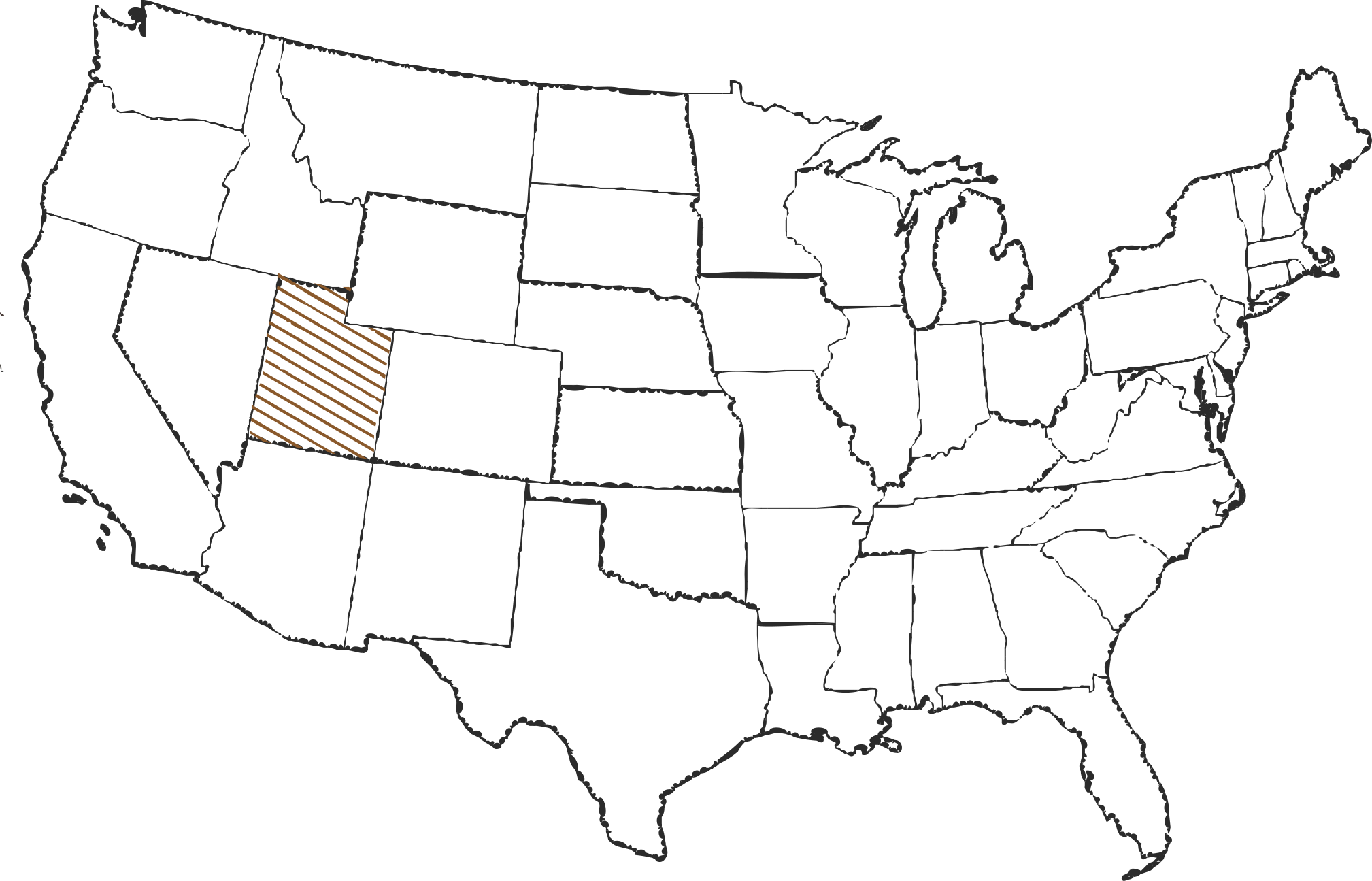
Mineral Rights · Utah

Mineral rights
in Utah.

Utah's oil and gas activity is concentrated in two basins in the eastern part of the state: the Uinta and the Paradox. Mineral ownership here often includes interests in long-producing conventional fields with steady royalty history. We are happy to help you understand what you have.

01

Two basins, mostly in the east.

Utah's oil and gas activity is geographically concentrated. The Uinta Basin in the northeastern part of the state accounts for most drilling and production, centered on Duchesne and Uintah counties. The Paradox Basin in southeastern Utah has a long history of conventional oil production, though at much lower current activity levels.

The Uinta Basin is known for its waxy crude oil, a high-quality but unusual product that requires specialized transportation and refining. This characteristic has shaped the basin's development history in ways that affect both operators and mineral owners.

Much of Utah's surface land is federal (BLM) or state-owned, but mineral rights are commonly held privately. Split-estate situations are common, and inherited mineral rights in Utah often trace back to homestead or mining claim origins.

02

Two basins, one more active.

Utah's oil and gas activity is concentrated in two basins, both in the eastern part of the state. Mineral ownership in either is worth understanding.

Uinta Basin
Utah's dominant oil and gas basin. Known for its waxy crude and steady, long-term production from both vertical and horizontal wells in Duchesne and Uintah counties.
Paradox Basin
A long-producing conventional basin in southeastern Utah. Historical activity in San Juan and Grand counties, with more modest current drilling but meaningful mineral ownership.
04

Who operates in Utah.

Utah's operator list reflects both large public companies and smaller private operators, with meaningful concentration in the Uinta Basin. If you receive Utah royalty checks, they likely come from one of these.

Utah's operator list shifts meaningfully with each cycle of consolidation. Smaller private operators make up a significant share of total production.
05

Utah is a straightforward state.

Utah's regulatory framework for oil and gas is generally considered efficient and well-organized. The state has extensive federal land involvement through the BLM, which adds a layer of complexity for mineral rights on split estates, but state-level processes tend to be clean.

State Regulator
UDOGM (Utah Division of Oil, Gas and Mining)The primary state regulatory body. Handles permits, pooling, and production reporting for non-federal lands.
Federal Involvement
BLM (Bureau of Land Management) for federal mineralsMuch of Utah is federal land. Mineral rights on federal surface or involving federal minerals require BLM approval processes that run parallel to state regulation.
Records System
UDOGM online records and BLM LR2000Utah has two parallel records systems depending on whether minerals are state/private or federal. Research typically requires checking both.
Pooling Process
Compulsory pooling availableUDOGM can order pooling when a majority of mineral owners consent. The process is generally straightforward and faster than Colorado.
Tribal Lands
Ute and Navajo reservations have distinct processesSignificant mineral rights exist on tribal lands in Utah. These interests are subject to BIA and tribal jurisdiction, with different processes than fee minerals.
Own minerals in Utah

Let us take a look.

Tell us what county you are in and we will put together a plain-English analysis of what you have. No pressure, no pitch.